PRESENTATION
The season ends in May with Giordano’s veristic tragedy, Andrea Chénier. It is an essential title, an intense and dramatic opera full of touching and moving melodies, with well-known arias such as the famous «La mamma morta». 2026 will mark the 130th anniversary of the premiere of this opera in Teatro alla Scala, in Milan, as well as the 73rd anniversary of its premiere in ABAO at Coliseo Albia.
This drama with a historical setting delves into social issues and covers topics such as hatred, violence, the civil war, resentment, class struggle, love and romance within the framework of the French Revolution, with the creative interpretation of life and death of the poet André Chénier.
For this title, full of vibrant, touching and fluent melodies, ABAO has gathered a first-rate cast led by the American tenor Michael Fabiano, who returns to Bilbao to play the leading role. With him, the remarkable soprano Saioa Hernández, who makes her debut in ABAO as Maddalena di Coigny. The leading trio is completed by a dramatic baritone, Juan Jesús Rodríguez, who plays Carlo Gérard.
The music director is Guillermo García Calvo, who conducts the Bilbao Orkestra Sinfonikoa to make the most of this score, full of extensive melodies, declamatory fragments and really effective scenes.
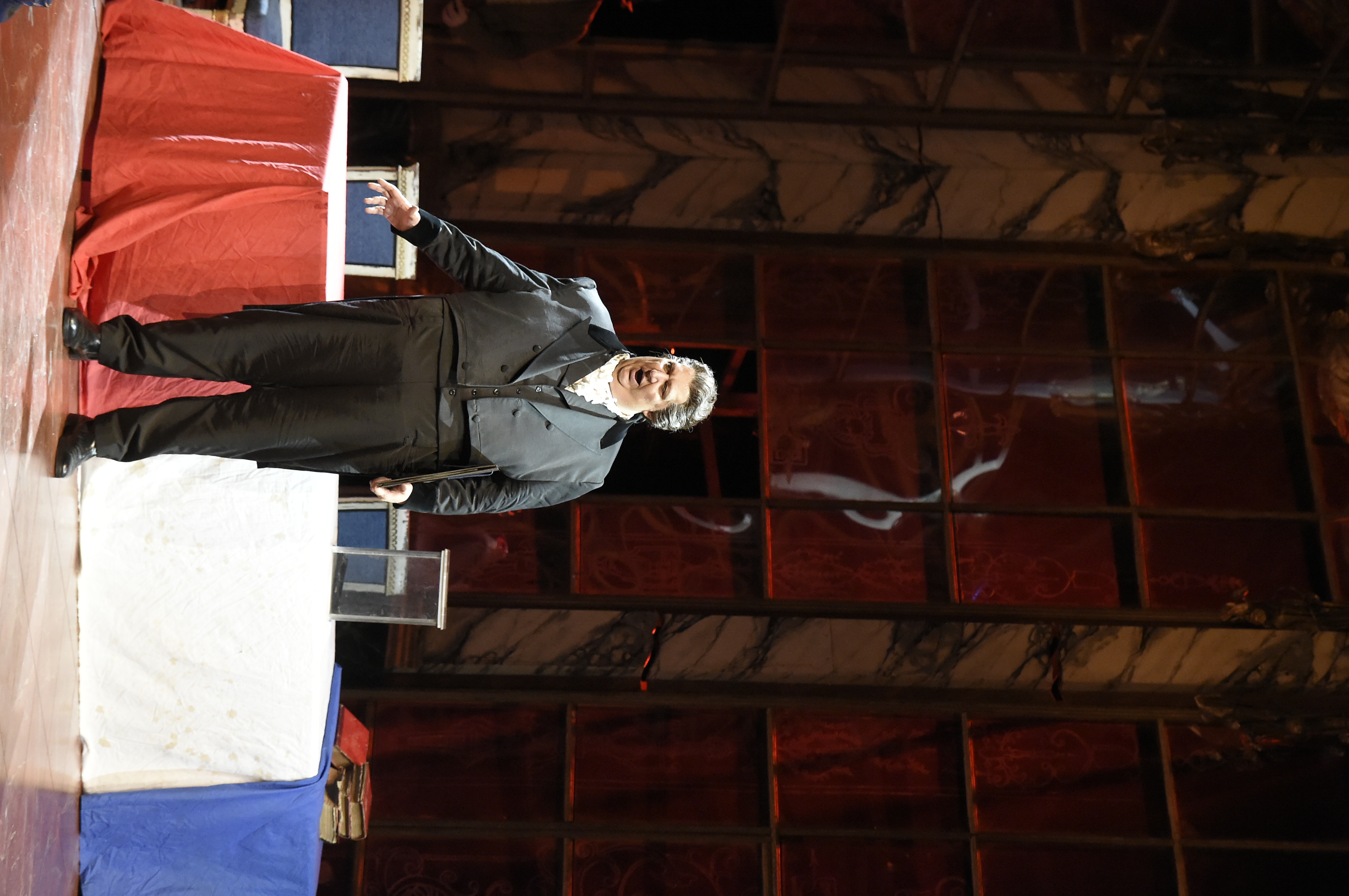
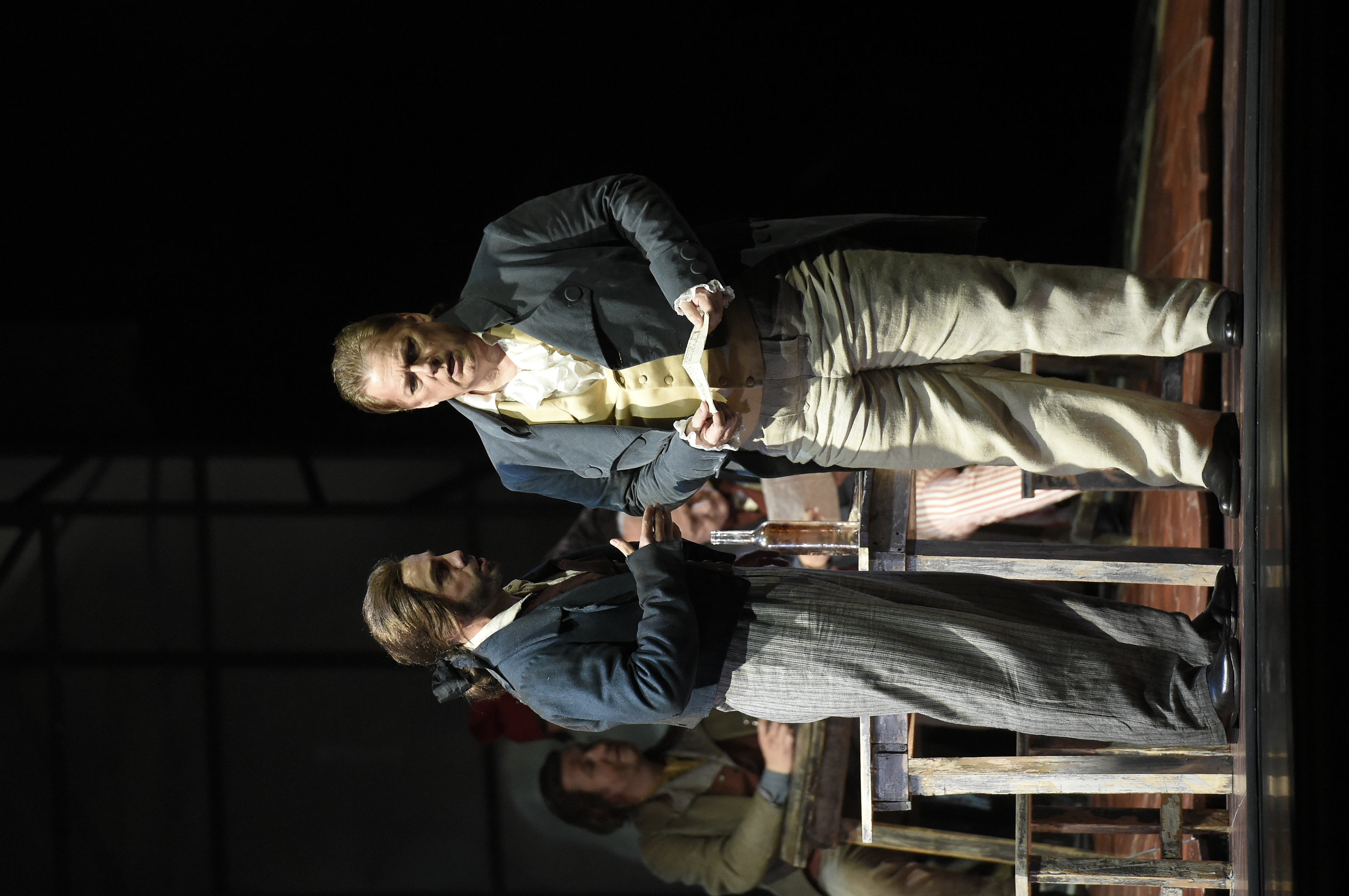
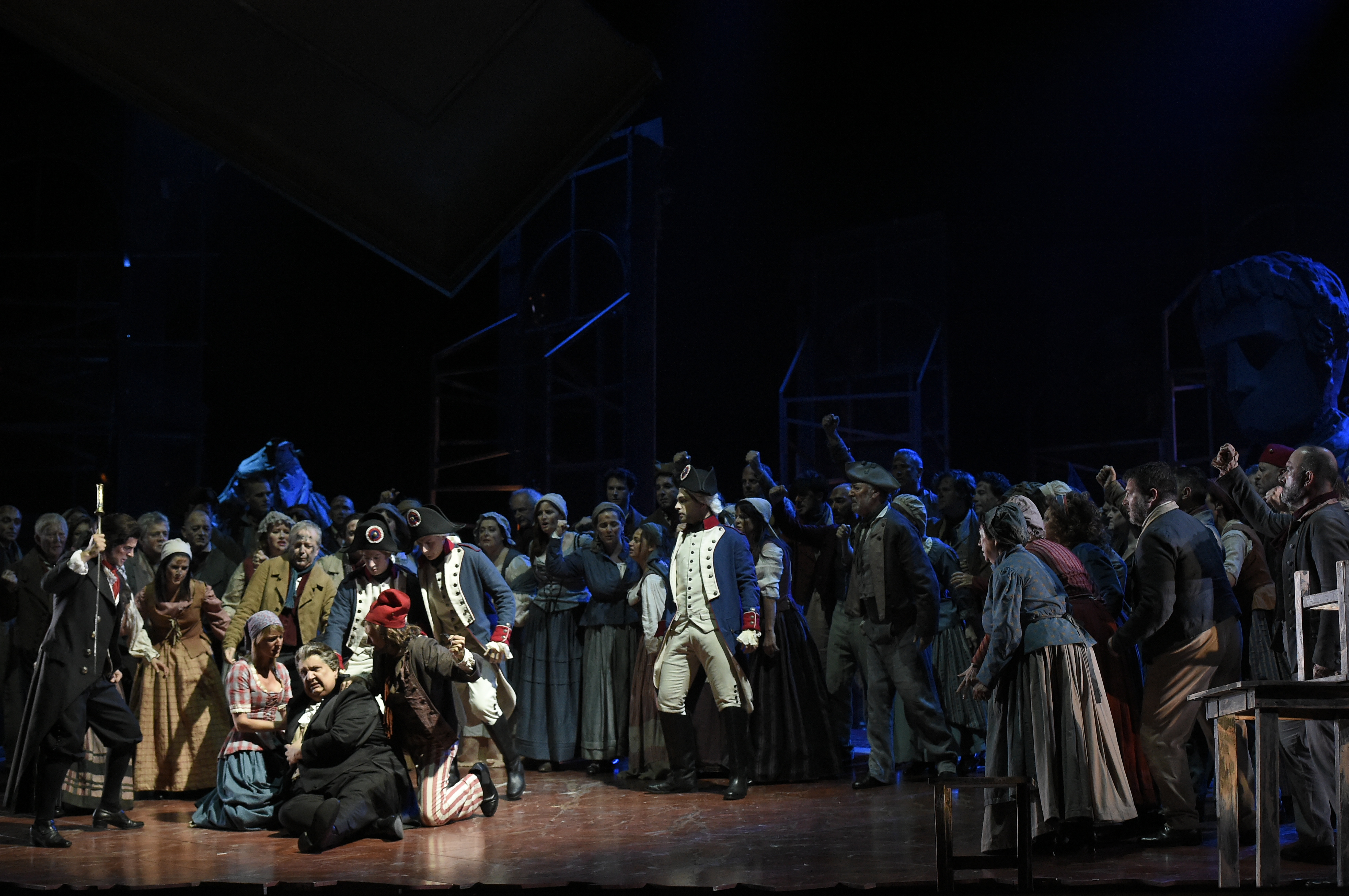
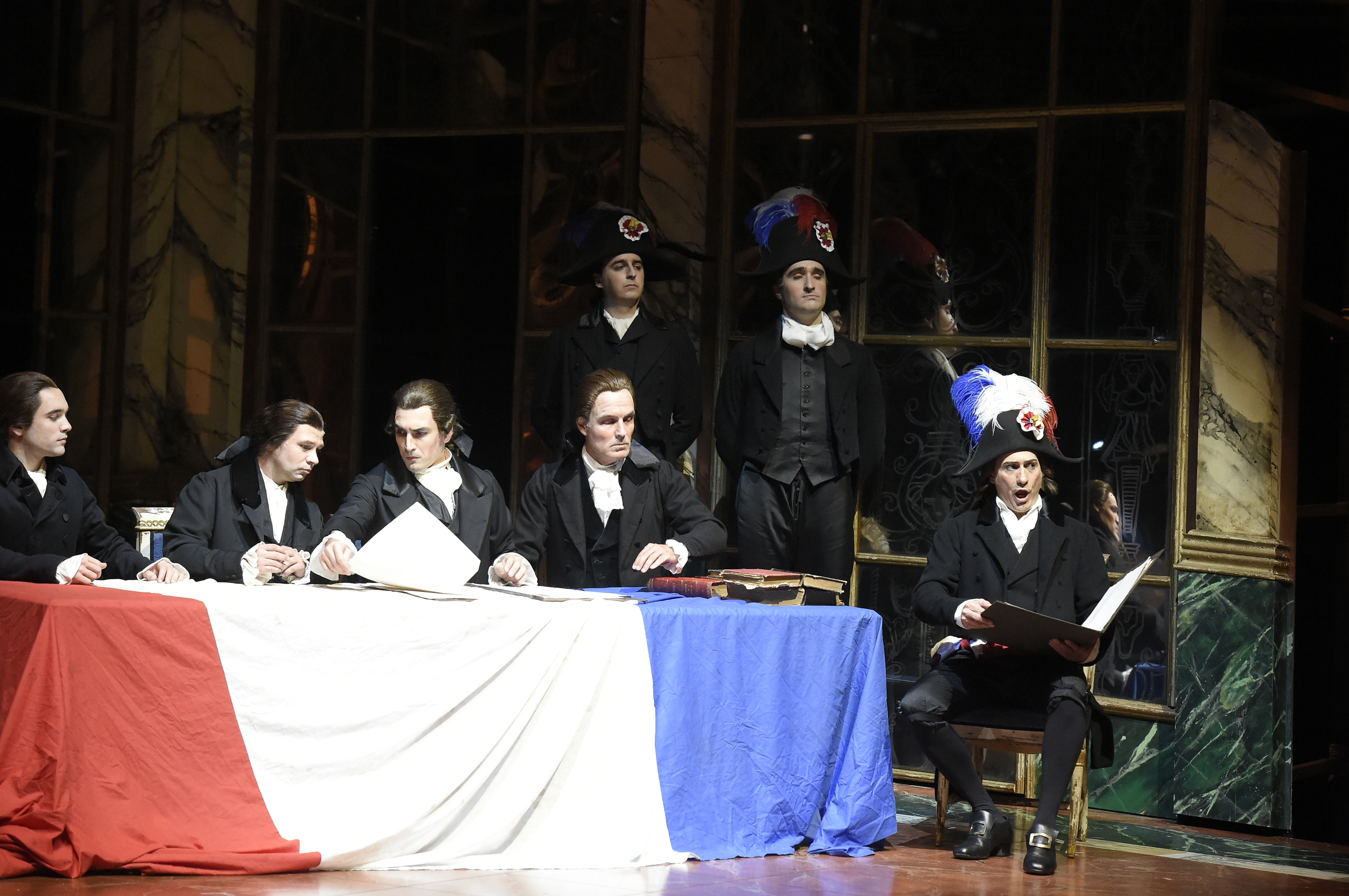
On stage, a co-production of ABAO Bilbao Opera and the Peralada Festival, devised by Alfonso Romero. The neat and elegant stage design is set in the French Revolution, with all its rawness. Palace rooms, prisons and courts give messages halfway between symbolism and gimmickry.
ARTISTIC SHEET
CAST
- Andrea Chénier
- Maddalena di Coigny
- Carlo Gérard
- La Contessa di Coigny / Madelon
- La mulatta Bersi
- Roucher
- Un incredibile / L'abate
- Il sanculotto Mathieu
- Pietro Fléville / Fouquier Tinville
- Schmidt / Dumas / Il maestro di casa
ARTISTIC TEAM
- Director Musical
- Dirección De Escena
- Orquesta
- Director Del Coro
- Escenografía
MULTIMEDIA
AUDIO
Youtube
SYNOPSIS
Act I
Coigny Castle. A winter afternoon in 1789.
Preparations for a party are fervently underway. In spite of the fact that the French Revolution is looming, the lives of the aristocrats seem to be going on as usual. The servant Gérard, who was caught reading the works of the encyclopaedists, has been forced by his master to decorate the greenhouse for the event. Filled with hatred for the family for whom he works and, in general, for the aristocracy in general, the young man is secretly in love with Contessa Maddalena.
The reception soon begins with the arrival of the guests, including the poet Andrea Chénier, who is presented as a very promising writer but who receives the first criticism from Maddalena because he does not write fashionable poems. The countess invites him to entertain the guests with some of his verses and, after an initial refusal, he launches into a defence of love, especially patriotic love, and denounces the customs of the aristocrats, blaming them for bringing the country to ruin.
Impressed by Maddalena’s youth, the young man invites her to respect a noble sentiment such as love, which is now being scorned by society. The countess, impressed by Chénier’s words, apologises to him. The party, which has just begun, is interrupted by a group of beggars who have been let in by Gérard. The countess reprimands her servant, who then delivers a speech of proud independence and tears off his loathed livery. After apologising to her guests, the lady invites them to continue dancing and the ball resumes.
Act II
Paris, June 1794, at the height of the Reign of Terror.
Andrea Chénier is sitting alone at a table in a café waiting for his friend Roucher, who soon arrives with a passport that he has brought for him. The poet’s life is in danger: Andrea Chénier has become a target of the revolutionary government and is constantly followed by an “Incredibile”, a kind of spy that Gérard, now one of the leaders, has sent to follow him. Roucher urges Chénier to use the passport, but the poet hesitates, convinced that fate has a great love in store for him: he explains that he has received numerous letters from an unknown woman. His friend replies cynically, reminding him that the letters could be a trap and Chénier reluctantly agrees to leave. The scene takes place as the two friends watch a group of revolutionaries, including Gérard, pass by. Around sunset, a young woman dressed as a mere seamstress appears near a bridge: it is Maddalena di Coigny. Chénier does not recognise her immediately, as the countess is far from the young lady she used to be and her arrogant nature has vanished completely.
Maddalena admits that she is the mysterious woman who has sent the letters and asks Chénier for protection: she is now alone in the world and surrenders completely to the poet’s compassion. They declare their love for each other, but the idyll is soon interrupted by Gérard who, alerted by the “Incredibile” and still in love with Maddalena, bursts in and challenges Chénier to a duel. While Maddalena escapes, the poet severely wounds his adversary, who, out of love for Maddalena, advises his rival to flee with the woman he loves, since he is being sought by the revolutionaries. He tells those who come to his aid that he doesn’t know the man who wounded him.
Act III
Inside the courtroom of the Revolutionary Tribunal.
France needs money and soldiers to support the war effort and Gérard, now recovered, tries to convince the crowd to donate whatever they have to the revolutionary cause. Even an old blind woman from the town, Madelon, offers up her only grandson, who is fifteen. The attention then turns to the “Incredibile”, who, when left alone with Gérard, advises him to quickly bring charges against Chénier. Gérard hesitates, since he is torn between human compassion, as he finds the false accusation despicable, and selfish passion. Ultimately, the latter prevails. Maddalena enters the scene. She has come to ask her former servant for help to free her beloved, but Gérard, unaware of her feelings for him, stops her and admits that he has used Chénier just to see her again.
In response, Maddalena offers herself in exchange for the poet’s freedom and starts telling the story of the misfortunes that have befallen her family since the outbreak of the Revolution. It is just at this point that Gérard, moved by the woman’s love and the suffering she has endured, decides to withdraw his accusations against Chénier, hoping that the Revolutionary Tribunal will release him. However, plans do not go as expected and, in spite of Gérard’s testimony and the poet’s heartfelt plea, Chénier is sentenced to death. Maddalena, blended in with the crowd, weeps in despair.
Act IV
In San Lazzaro’s prison, the night before the execution, Chénier, with the help of his friend Roucher, writes his last verses before dying. After Roucher’s departure, a knock on the door is heard: it is Maddalena who, thanks to Gérard bribing the guards, has obtained a pass for a last meeting with her beloved.
The two are finally together and Gérard, in tears, leaves to try and get Robespierre to intervene in extremis. At dawn, Maddalena exchanges places with a prisoner, to whom she gives the pass. She calmly joins the rest of the prisoners, determined to die with the man she loves. As they climb onto the cart, Maddalena and Chénier sing: “Long live death together!” In a corner, Gérard cries bitterly, clutching Robespierre’s note: “Even Plato banished the poets from his Republic”.